
Share this post
What will 2026 have in store for the world of English Language Teaching?
For the last few years, Ellii has tasked me with making predictions for the ELT trends of the coming year. Sadly, my mystic powers remain undeveloped, so I seek the assistance of esteemed experts online.
This year, I was astounded by the response. It has taken me some messy mind mapping and some AI assistance to pull together the top trends and wishes for the year ahead.
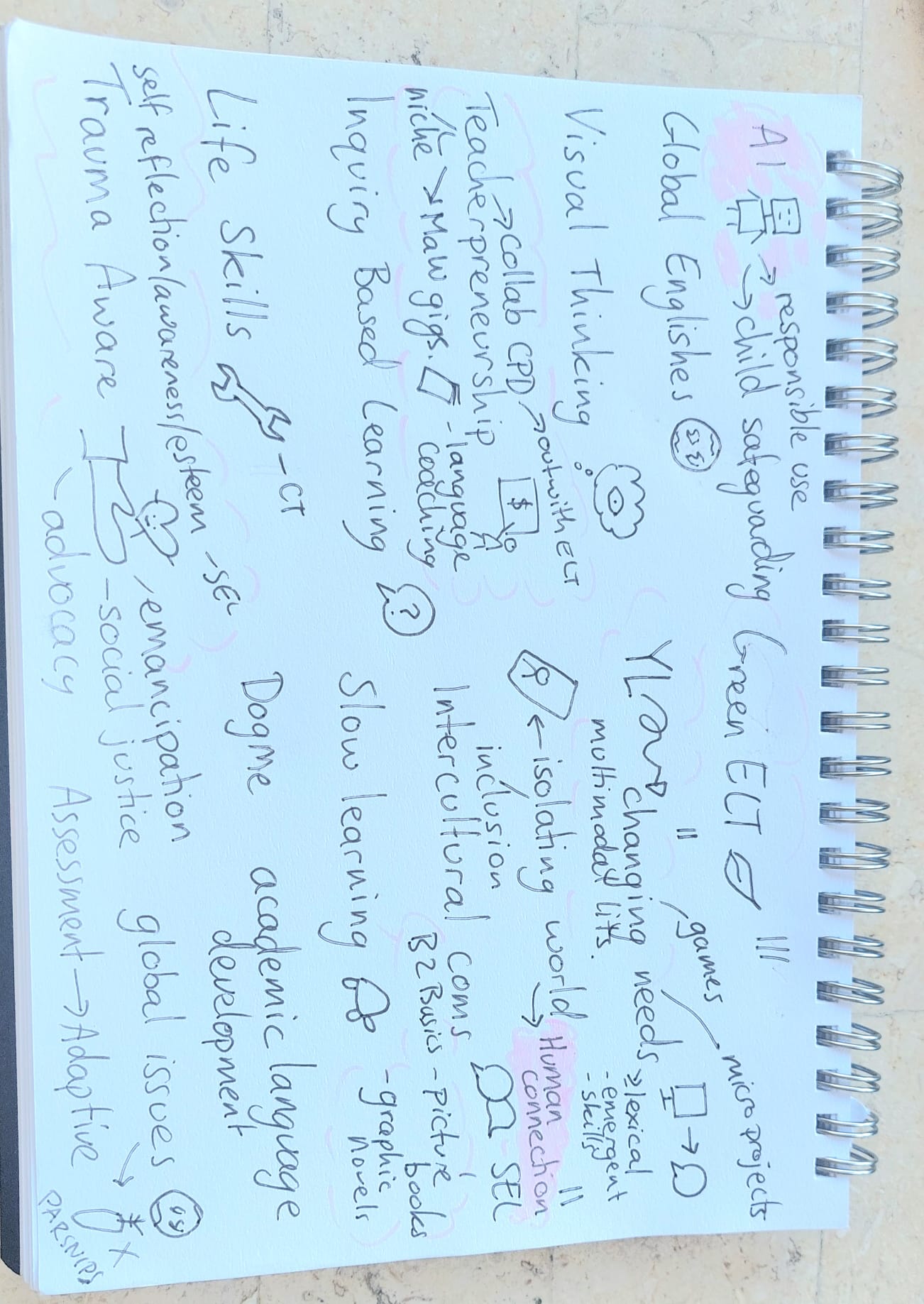
Here goes! Let's start with the trends.
What's hot in ELT in 2026
1. Human connections
Overwhelmingly, human connections wins the gold medal. This could be a push back against the increasing prevalance of artificial intelligence. Many practitioners shared their concerns over the growing isolation learners and teachers experience and how to recapture the social connections within the language classroom.
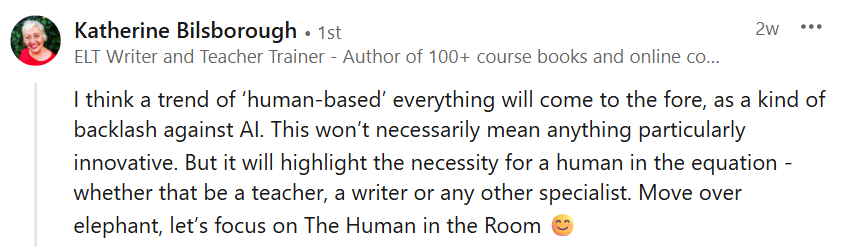
There was a lot of discussion around "back-to-basics" approaches such as dogme, projects, games, picture books, visuals thinking, and graphic novels.
2. Artificial intelligence
Unsurprisingly, AI is still riding high. Perhaps human connection wouldn't be at the forefront of so many practitioners' minds without it.
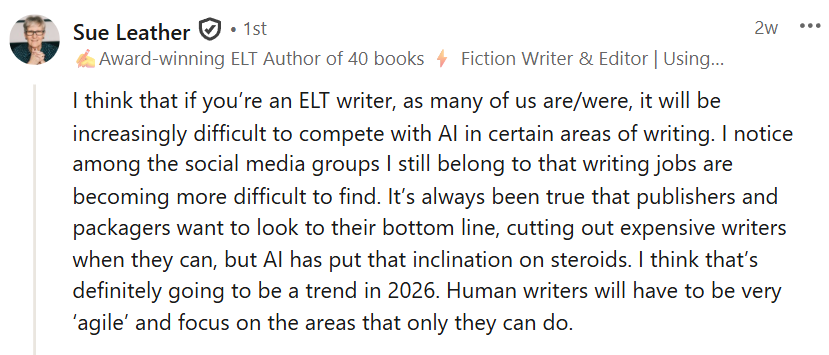
Sue Leather shared her worrying reflections that ELT materials developers are finding it more difficult to find projects, as more publishers move towards AI-generated content.
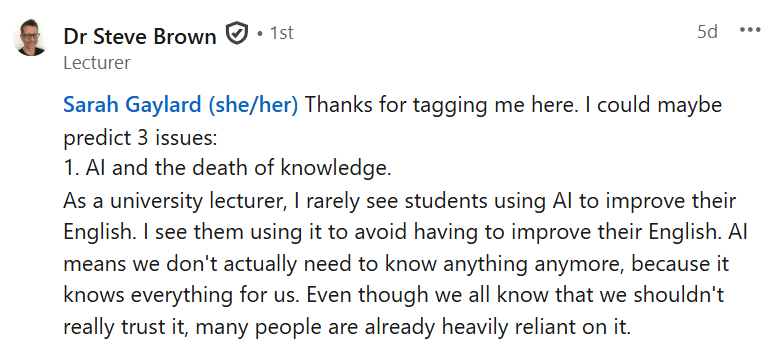
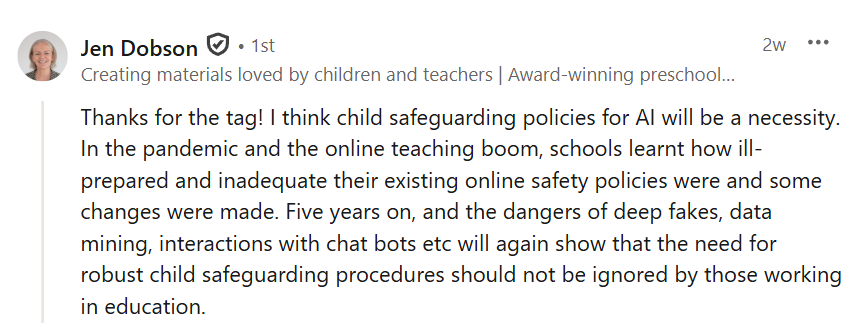
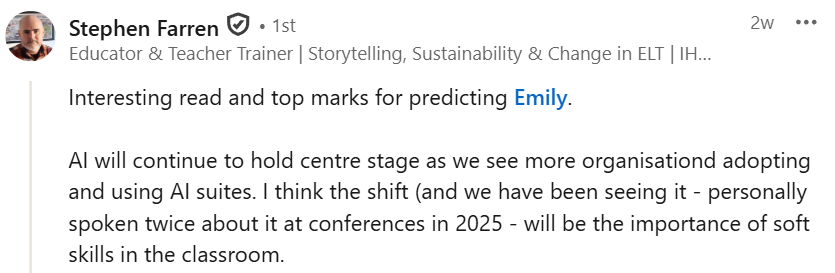
From a classroom perspective, particular concerns were raised around safeguarding, responsible use, and the erosion of need to learn English.
If you'd like some ideas to support your learners to use AI responsibly, check out these blog posts:
3. Teacherpreneurship
As technology becomes more affordable and accessible, more teachers are finding ways to boost their income, diversify their skills, and set themselves up as entrepreneurs.
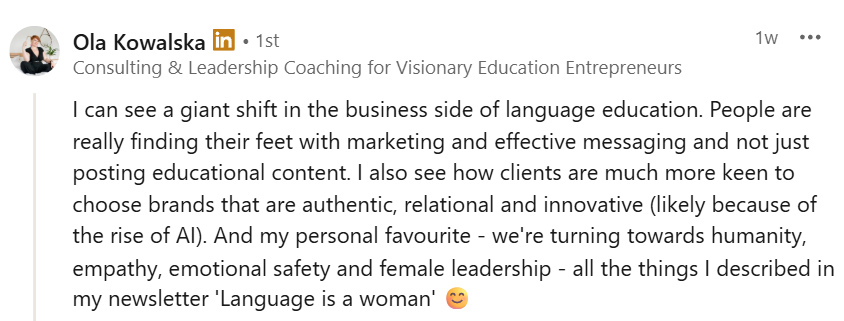
Business coaches such as Rachael Roberts and Ola Kowalska are noticing more confidence with marketing and more individualized offers.

This is good news for students, who can benefit from learning experiences that are truly tailored to their needs.
If you'd like to know about teacherpreneurship, you may like these posts:
You may also want to check out Ellii for Independent Teachers, which is the perfect platform to use with private classes.
4. Trauma awareness & social emotional learning
Multiple ELTers mentioned the need for language teaching to be well-being focused and trauma aware. As Stephen Farren said, we have to have an "understanding that 'trauma' doesn't come from a specific part of the world."
Social justice, advocacy, and the ESOL classroom as an opportunity to support learner emancipation were key themes under this umbrella.
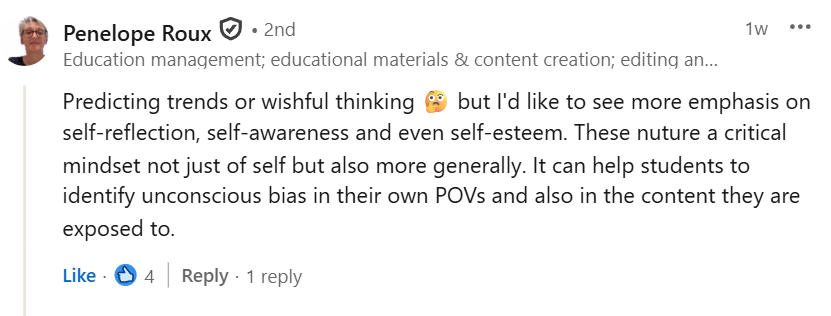
Penelope Roux had this to add about self-reflection, self-awareness, and self-esteem:
Here are a couple of posts on this theme:
5. Soft skills (aka life skills)
"Future Ready" is likely to remain popular this year. These are skills such as critical thinking, creativity, communication, problem-solving, teamwork, and digital skills. They are skills that are essential in order to be successful in the classroom and workplace.
Check out these posts on the topic:
Wishes
As the discussions developed, people started to notice distinctions between trends that they could see happening vs. things they wished would happen.
Here are things that we would like to ask the ELT fairy godmother to bring in 2026.
1. Global issues
In many coursebooks and language, PARSNIPs are erased. These are:
- Politics
- Alcohol
- Religion
- Sex
- Narcotics
- Isms (e.g., racism, sexim, feminism)
- Pork
The reasons from this often stem from trying to create "one-size-fits-all" courses as well as avoiding arguments or triggering topics in class.
However, many students and practitioners feel strongly that these topics should be a key part of the classroom. Teachers and students have the power to be changemakers.
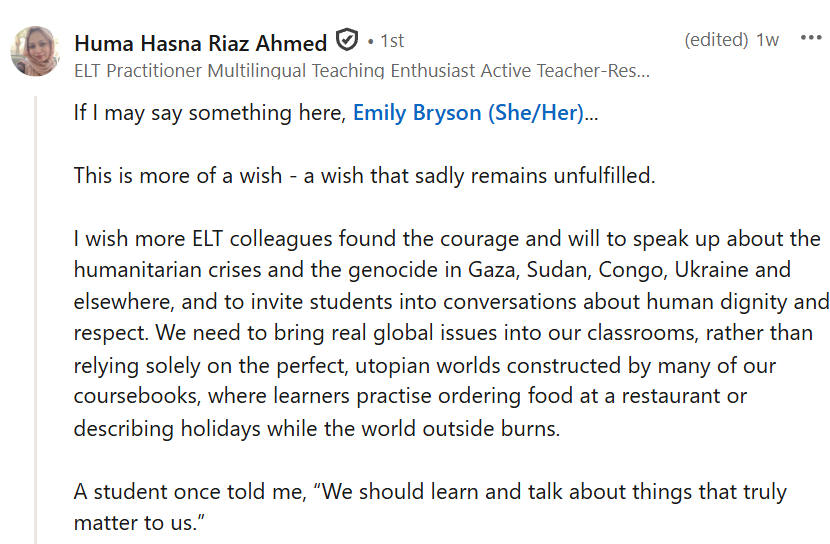
The Ellii resource bank is full of lessons with global topics. This blog post will get you started:
Teachers & Learners as Changemakers
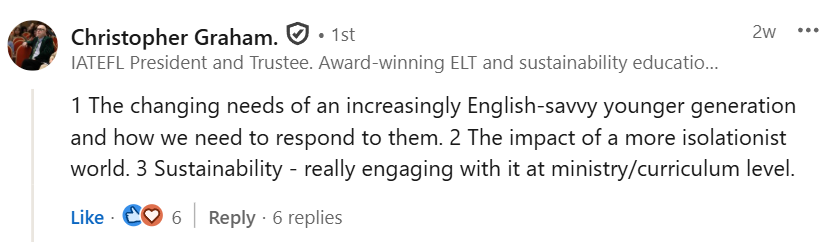
2. Sustainable ELT
The English language classroom can be a vehicle for direct action when it comes to environmental topics. Practitioners hope to see more of this in the coming here.
Here is a post with ideas on Greening the ELT Classroom.
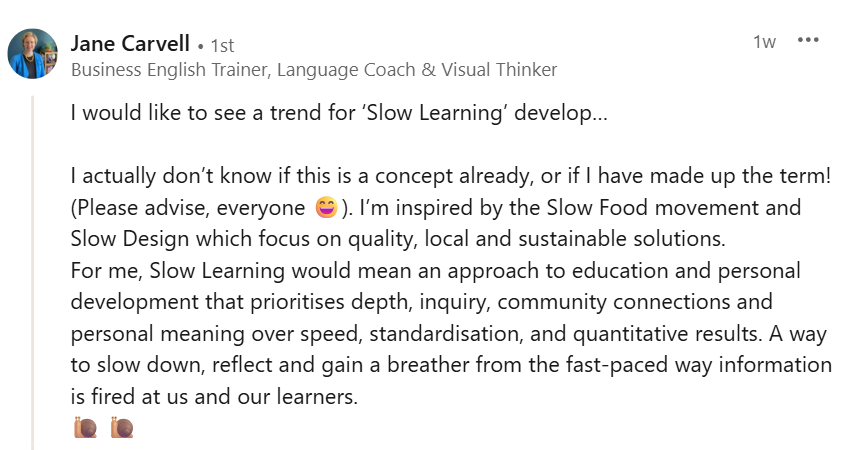
3. Slow learning
Jane Carvell shared a wonderful idea inspired by the Slow Food Movement. It captured my imagination, especially with the growing desire for human connection. The "slow" approach focuses on removing the pressure from learning and going at a pace that allows learners to make connections, ask questions, and prioritize deep learning.
4. Extensive reading
Perhaps another throwback to the "back to basics" and "human connections" that underpin this year's predictions relates to the essential skill of reading. Lots of practioners mentioned the joy of storybooks, picture books, graphic novels, and extensive reading in class.
You can read Sue Leather's post about it here:
Sue Leather: The Benefits of Reading for Pleasure
Here are some reading recommendations for your learners:
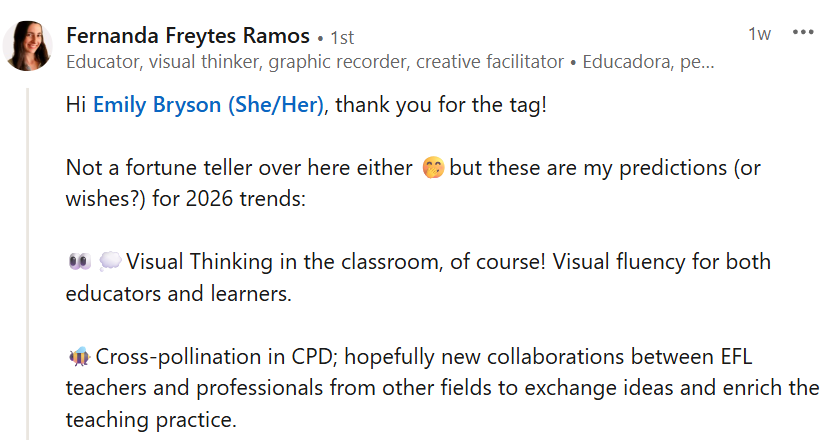
5. Visual thinking
Graphic organizers, visual tools, infographics, images, and doodles are a great way to simplify complex information and aid understanding. In recent years, graphic facilitation techniques have become more popular. Perhaps because they are a great "back-to-basics" approach that boosts human connections.
This year, the World Sketchnote Week Conference that takes place from January 12 to January 16 has two whole days devoted to education, with many language-teaching-focused sessions. Check it out, and come see me share some of my ideas to add sparkle to your lessons with sketchnotes.
You can find more on this topic here:
So, what do you reckon?
What will 2026 have in store for English language classrooms around the world? What are your wishes for the year ahead? We'd love to know your thoughts.
If you'd like to read the comments on my LinkedIn post, or add your own, here is the original post:
Emily Bryson's 2026 Trends in ELT LinkedIn post
Here are links to my trends posts from previous years:
Wishing you all the best for 2026!
Comments


There are no comments on this post. Start the conversation!