

Share this post
For me, the theme of TESOL this year was finding a balance between the old and new, incorporating both the familiar and the novel into our lessons and lives. Tucked in between and within sessions about AI and technology were many inspiring messages about human creativity and connection.
Ellii is an old hand at TESOL, attending it for over 20 years. But this year, we sent three completely new members, including myself. It was the first time we had met each other in person, and we hit it off. I couldn’t ask for better teammates to spend TESOL with.

But not everything about this conference was completely new—I was born and grew up in Utah, so for me, it was coming home. Whether it was the sight of mountains peeking from behind the downtown buildings, the warm, dry air, or the “dirty soda" bar in the expo hall, I constantly felt a sense of familiarity at this conference.
As TESOL celebrated its 60th anniversary, the Wednesday night keynote by the president of TESOL highlighted many of the members who have made a difference in teaching over the years. It made me reflect on how the field of teaching always has to deal with this balance of building on tradition and embracing the new. I saw many examples of this balance in the sessions that I attended. I’d like to highlight a few of these sessions.
Thinking about the future of learning
The Wednesday morning keynote, The Interplay between Technology and Humanity: Shaping the Future of Education, by Enilda Romero-Hall, prompted us to think about what education will look like in the future and where learners will go to find an education. She emphasized the importance of having conversations about accessibility and equity, and of developing communities for learners.
When the presenter gave us the prompt to think about one word we would use to describe the future of learning, the word that came to mind was “flexibility.” Learners come in all levels and with unique background experiences. As teachers, being flexible is how we can adapt to help our students succeed in a world where change is constant.
Creating spaces for learning
I also noticed a theme of creating learning environments at TESOL. As teachers, we want to make the environment of our classrooms conducive to learning, no matter what level our students are at. We want them to feel comfortable by incorporating things that are familiar to them along with the new language.
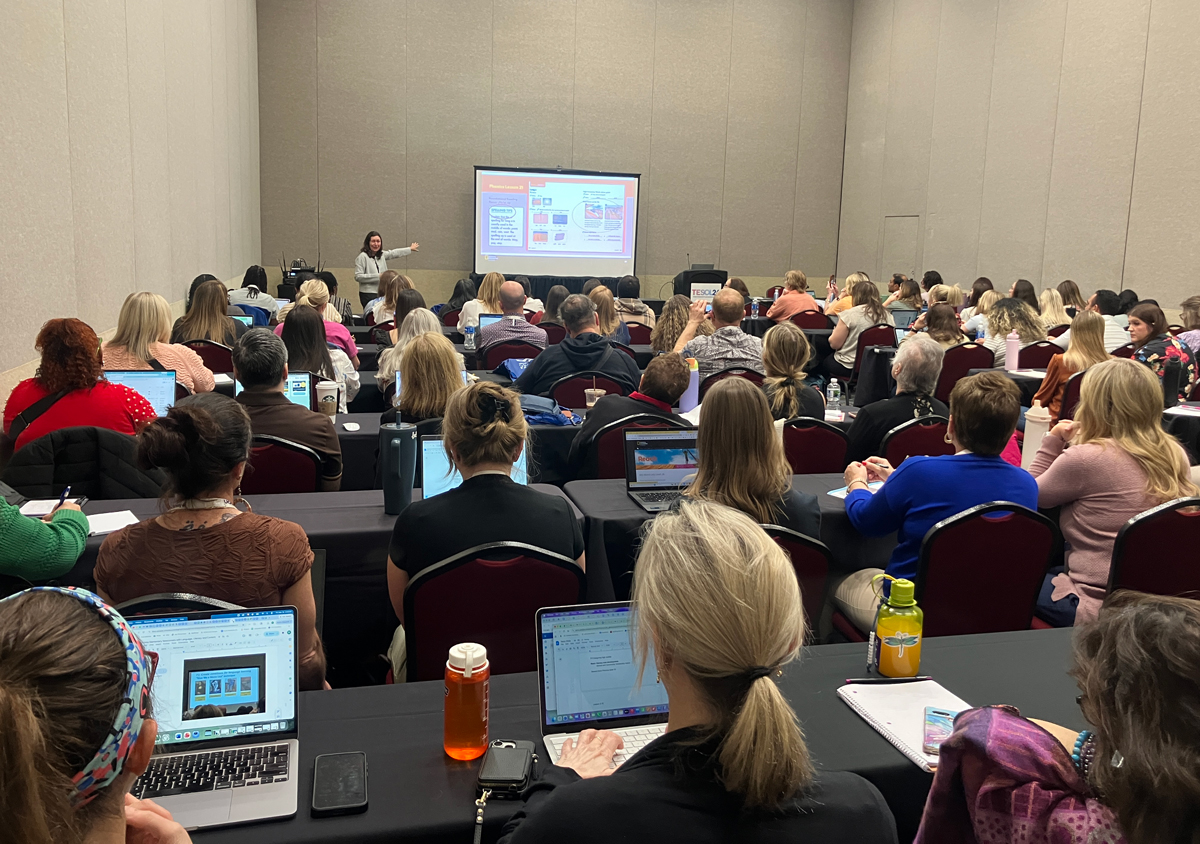
In the packed Thursday session Welcome Elementary Newcomers With Language, Literacy, and Content, Deborah Short from National Geographic Learning/Cengage gave us some key principles for teaching newcomers:
- Know your newcomers and the resources they bring into the classroom
- Create conditions for language learning
- Design high-quality language lessons
The learning environment not only includes the physical space where you teach, but also involves giving students ways to get help, express how they feel, and find comfort in routines. If you know your learners, you can utilize their background knowledge and skills to help them develop challenging new skills in English.
We also need to consider the learning space in conjunction with new technologies such as AI. In the session on The Future Academic English Textbook: AI Changes Everything by Dr. Ken Beatty, we explored the challenges of AI in the classroom and how to work with it. If we assign a task to students that isn’t meaningful or useful to them, then they will be tempted to just use AI to complete it. Instead, we can encourage students to get different perspectives and learn about representation bias in AI-generated materials.
One suggestion he had for lesson planning is to create activities that are AI-proof by having students give opinions and personal examples from their own experiences. Have them show drafts of their work and focus on the process over the outcome.
These points reminded me of Ellii’s Discussion Starters, which feature speaking activities that focus on opinions and personal experiences. They are my favorite lessons to share with my own students to get them both thinking and talking, and it looks like they can be effective for AI-proof teaching.
Along with all these great tips for creating materials, my main takeaway from this session is that ethical use of AI is a skill we should be teaching our students rather than avoiding AI. We must address new and pervasive technology with critical thinking.
Improving conversations outside of the classroom
Two of the most enjoyable sessions were interactive workshops focusing on discussions and soft skills.
Rewarding Small-Group Speaking with Semisynchronous Discussion Circles, led by Mark Makino of Southern Utah University, introduced the idea of creating discussion circles where students can hold discussions in class or meet up and record themselves outside of the classroom.
In the spirit of presenting on discussion circles, the presenter put us in groups of 4 or 5, gave us each a role, and had us hold our own discussion on teaching strategies. Our roles included the leader, the stubborn one, the generous one, the shy one, and the attentive one. It was fun to experience the activity from the students' point of view and also reflect on our roles at the end.
Eamon McGowan and Haley Boone led a delightful session on Soft Skills in Action: Practical Strategies for EL Classrooms. This session focused on teaching the students not only how to use soft skills, but also how to talk about soft skills outside of class, such as in a job interview, and apply them to their own experiences. The steps in this teaching process include…
- Teach specific soft skills
- Practice the skills in a low-stakes activity with roles assigned to each student
- Practice in a higher-stakes activity that demonstrates skills beyond the classroom
- Describe the soft skills and how to respond to questions about them
Both of these sessions taught me ways to incorporate routines and familiarity alongside learning new skills, and I’m excited to apply them in my own lessons and in creating materials at Ellii.
Embracing both the old and new at Ellii
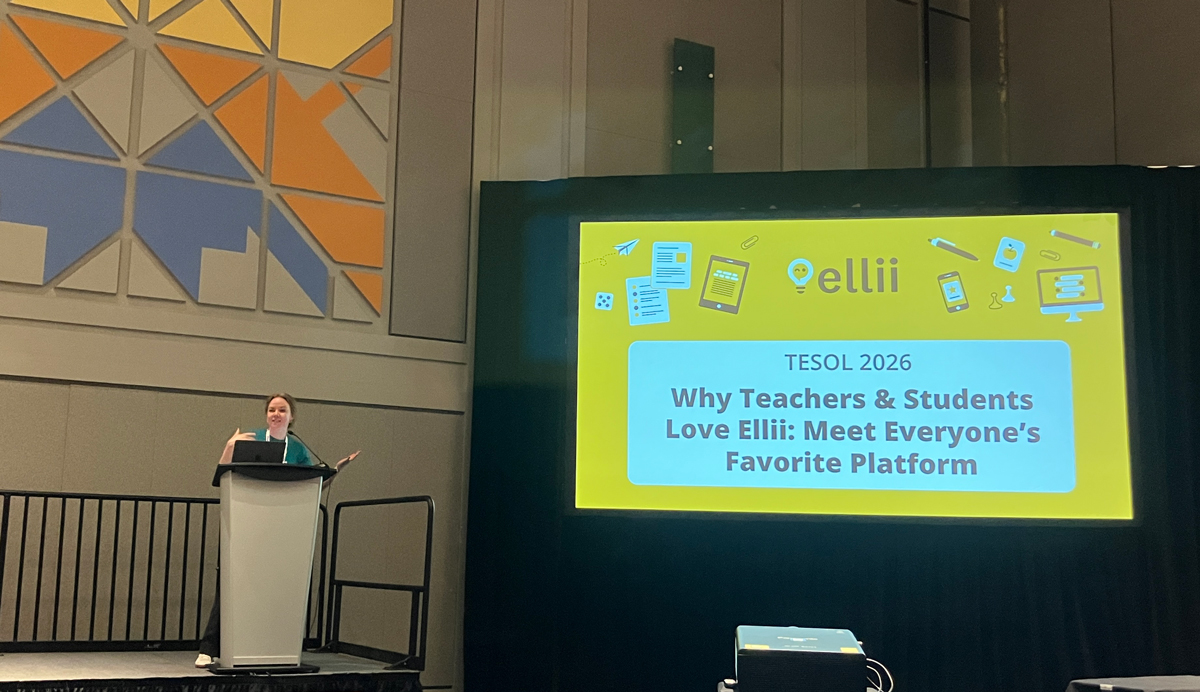
The pre-keynote speech and our own Ellii sessions led by Christine and Kylie highlighted Ellii’s newer gamified features, Ellii Polls and Dilemmas, our First Five section for adult literacy, and how to organize materials and share them with students using Ellii's Lesson Planner.
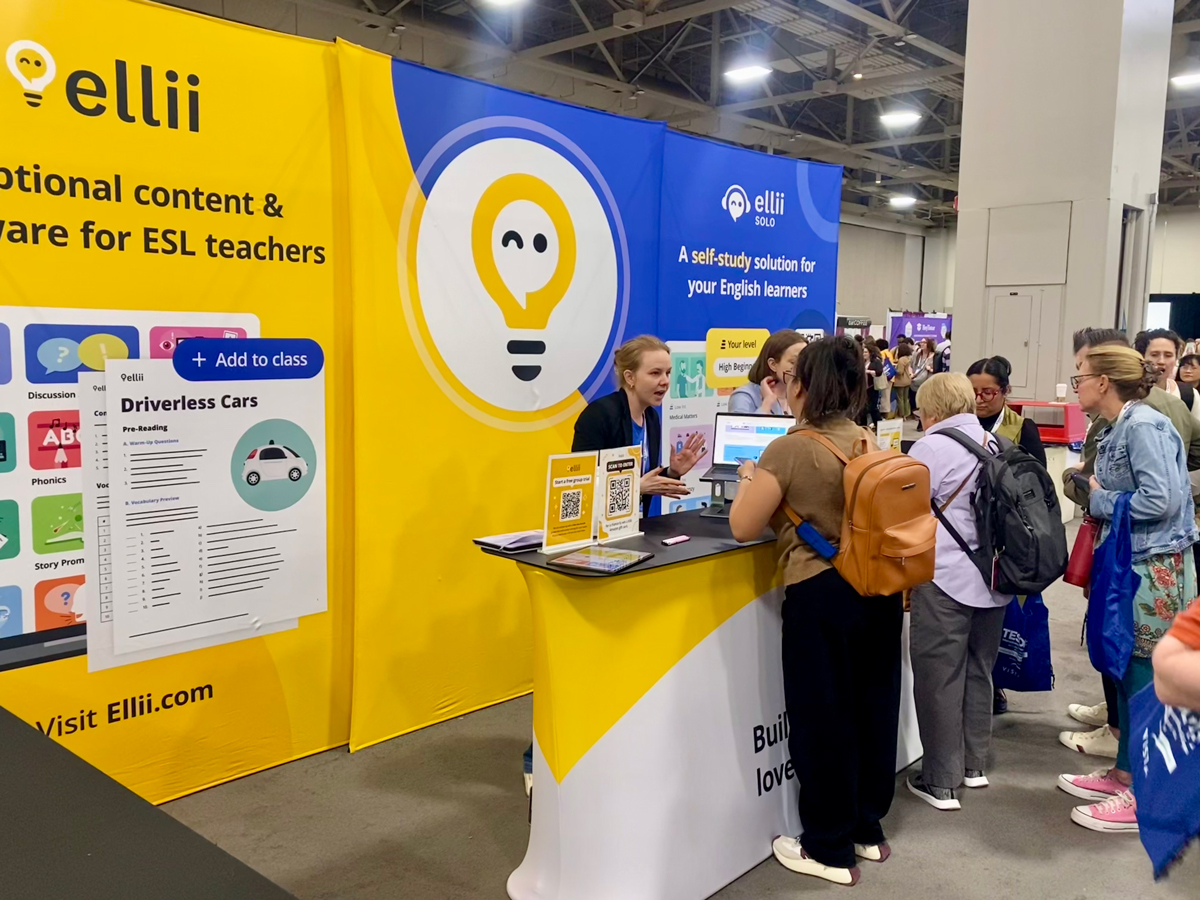
As a member of the publishing team at Ellii, I enjoyed asking teachers who stopped by our booth what resources they use at Ellii. Our new civics materials are a big hit, along with the many workplace courses we’ve put out in the past few months. Teachers also enjoy our classic holiday lessons and pronunciation videos. And of course, they love to visit our booth at conferences and get some pens, chocolates, and T-shirts! Being able to share Ellii with teachers who had never used our lessons before was also a great experience.
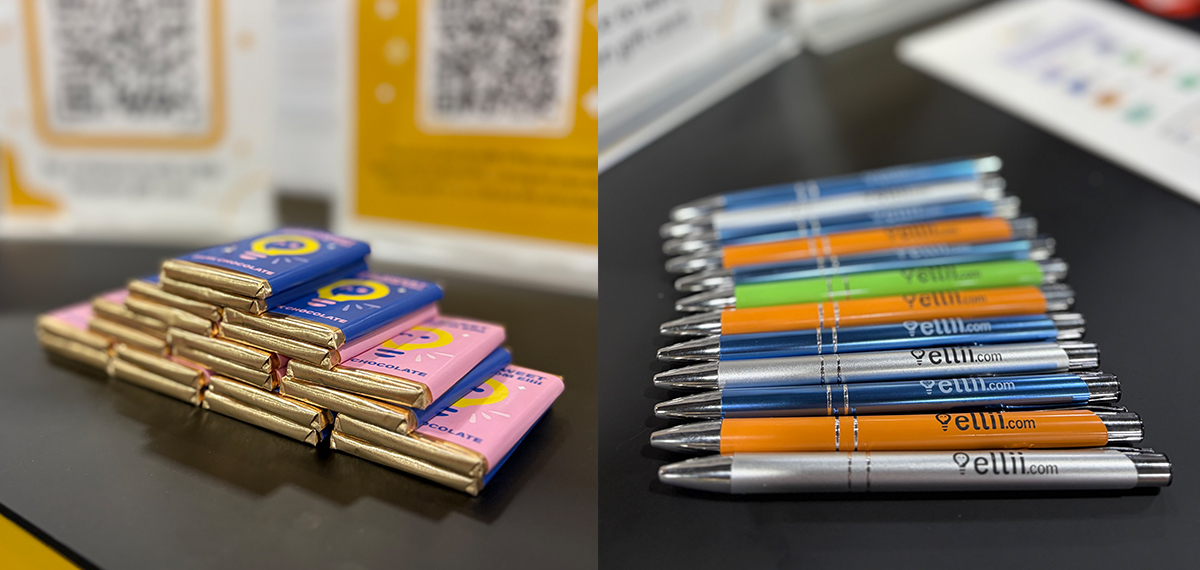
At Ellii, we want to continue offering teachers flexible options for teaching, whether they need print materials and flashcards or are incorporating digital lessons and videos into their classrooms. We continue to embrace the future of language education and the ever-changing needs of our teachers and students.
Thank you, Salt Lake City! We look forward to the next meet-up at TESOL 2027 in Houston, Texas.
Comments (1)

Christine I.(Teacher)
April 1, 2026 at 4:56 pm